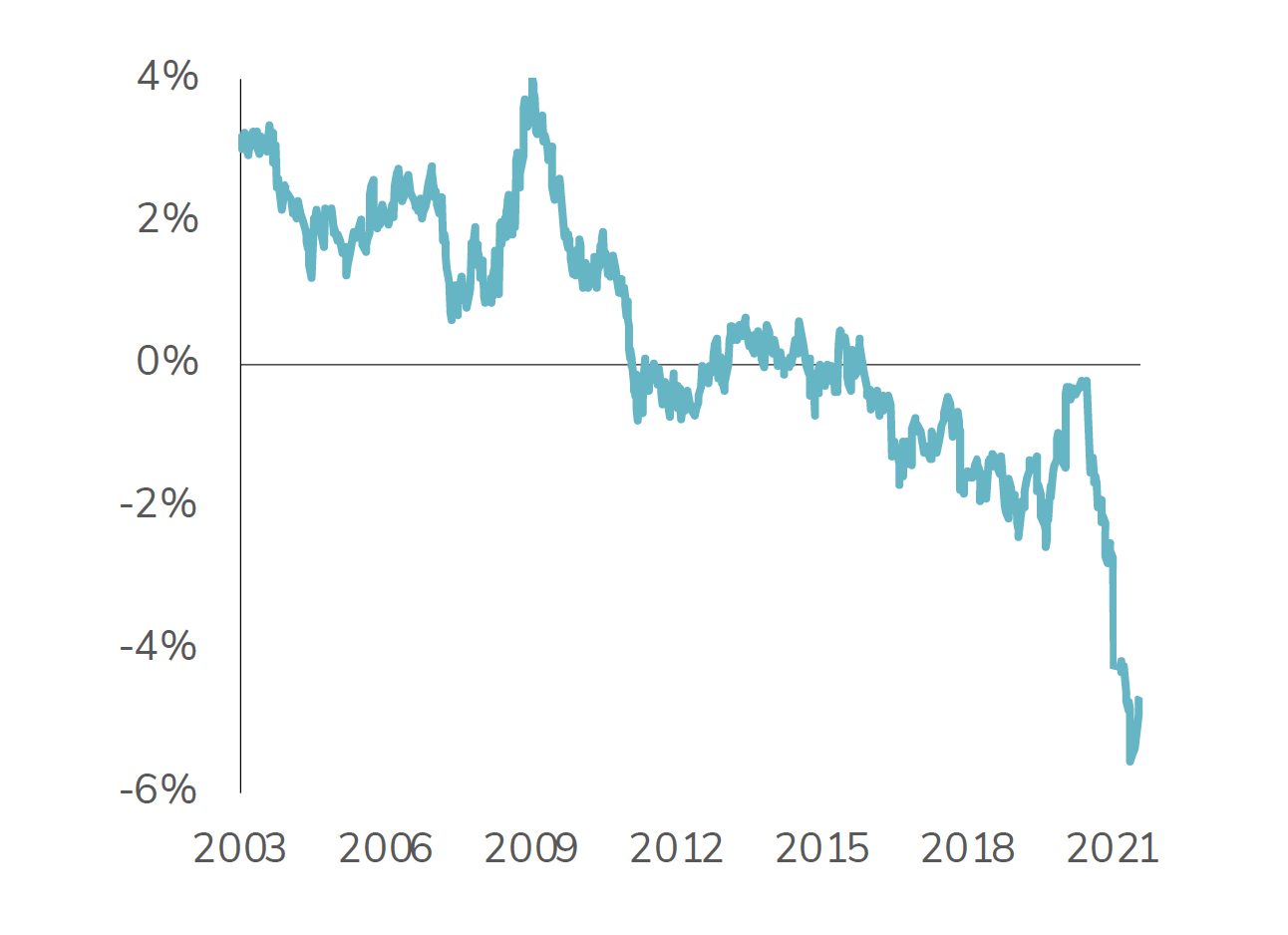
Albert Edwards, the well-known strategist from Société Générale, built his reputation in part on the "Ice Age" theory. In 1996, he made the assumption that the major economies (United States, Europe) would follow in Japan's footsteps, i.e. face a long period of deflation and stagnation of their GDP growth. From his point of view, this macroeconomic context was likely to lead to a decorrelation between bonds and equities and an outperformance of long-duration bonds compared to global equity markets. In his craziest dreams, Albert Edwards even assumed that the US 10-year could yield -1% and that the 30-year yield would also end in negative territory. As for the equity markets, the strategist expected growth to outperform value...
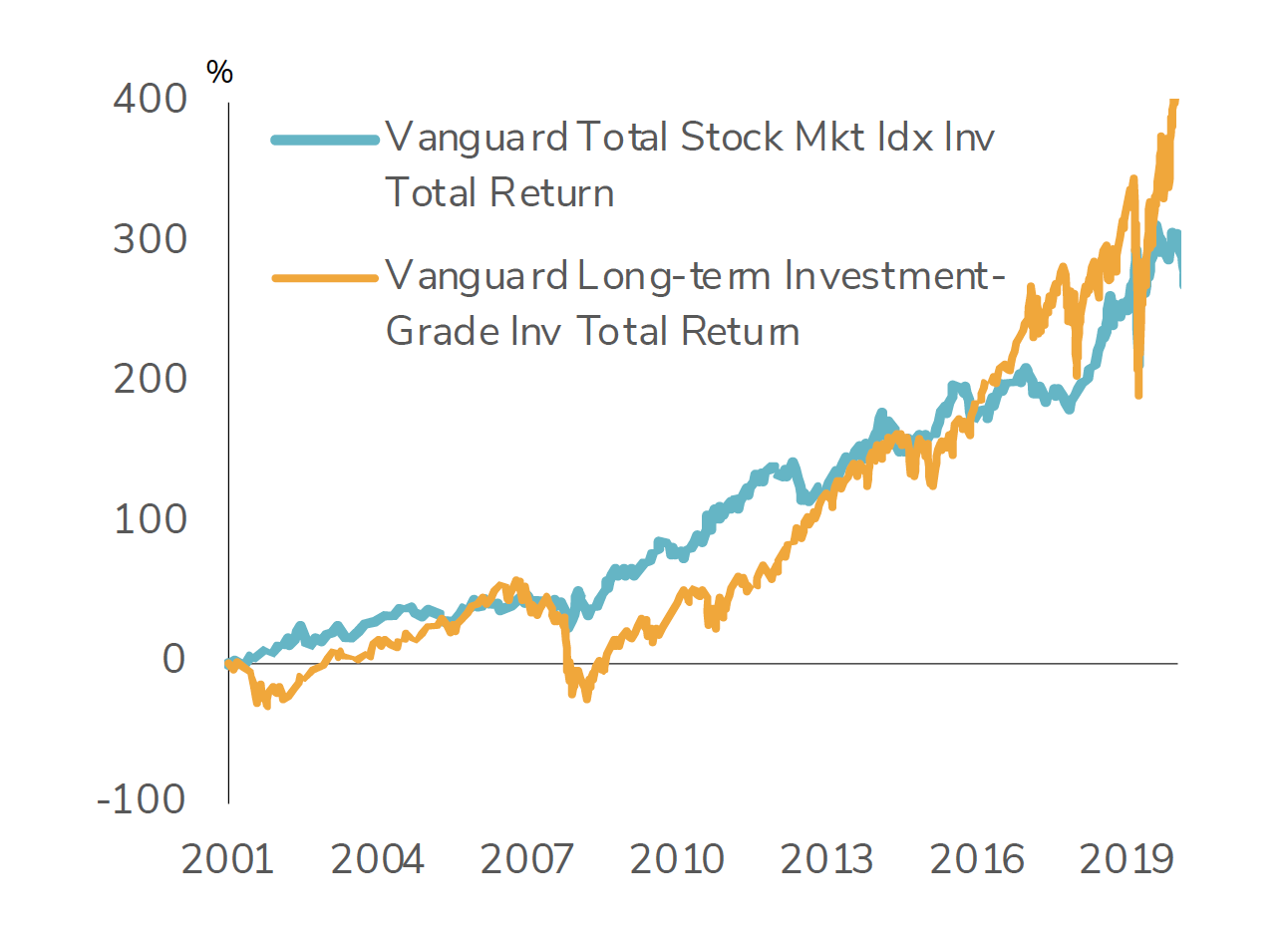
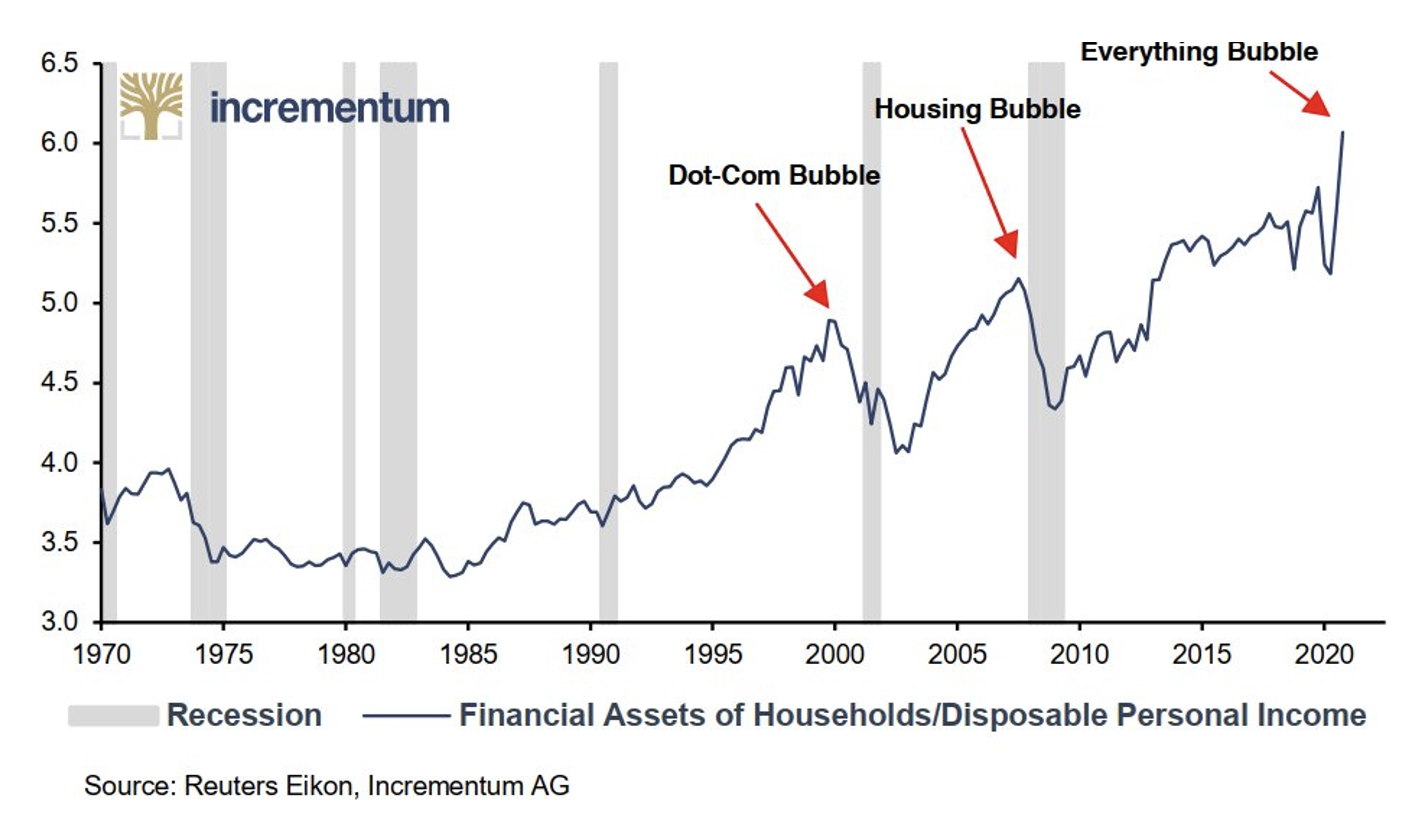
Twenty-five years after his first publication on the topic, it seems that the extreme scenario imagined by Albert Edwards is unlikely to come true - at least not at this stage. On the other hand, the vast majority of his predictions proved to be accurate: the G7 countries have indeed had to face several prolonged episodes of deflation and sluggish growth. And while most market participants have been talking about an unprecedented bubble in the equity markets, the best cumulative performance over the last 20 years has been produced by long-duration sovereign bonds - and with lower volatility (see chart below). During this period, the growth style (especially technology stocks) has outperformed the value style (banks, basic resources, energy, etc.) to an unprecedented degree.