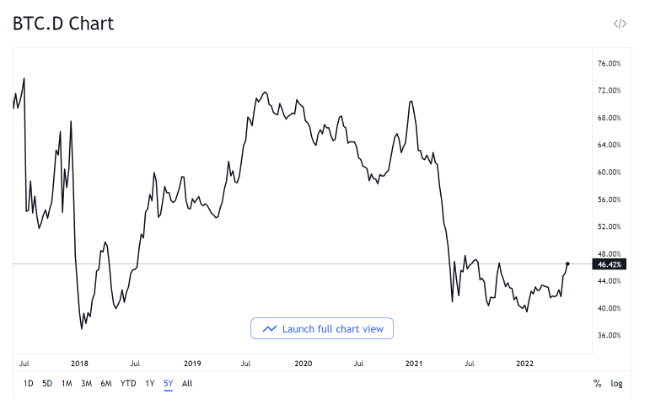
Bitcoin's success has attracted tens of thousands of potential competitors. But to challenge Bitcoin's dominance, new entrants need to differentiate themselves on certain technological aspects, such as a different mining system, more attractive financial incentives, higher transaction speed, etc. Some of the new protocols remove energy input and replace it with human governance input.
But most of these competing projects to Bitcoin are differentiated at the expense of decentralization, which is the main goal of a blockchain.
Satoshi Nakamoto, the inventor of Bitcoin whose real identity has yet to be revealed, deliberately sacrificed most of the parameters in the design of the Bitcoin network in order to achieve an automated, decentralized and auditable global transfer agent and ledger, and nothing else. He combined existing technologies with proof-of-work algorithms, then added computational difficulty. It is this combination that is at the heart of the innovation.
Proof-of-work is not only useful but absolutely essential. You always need an anchor in the real world. And it is indeed energy that is the anchor point of Bitcoin, just like the vast majority of productive tools we use in our daily lives.
Since its inception, Bitcoin has undergone numerous updates via soft "forks". Many miners have had to shut down or move their computers. But the basic design of bitcoin remains unchanged. Its uptime since March 2013 is 100%. Even Fedwire, the U.S. Federal Reserve's interbank settlement system, has not had 100% uptime during that time.
Most other crypto-currencies promise to add more features to their protocol and present these aspects to investors as innovations. Some are indeed noteworthy (Ethereum, for example). But most protocols innovate at the expense of decentralization.
Unlike the bitcoin network, which has no central organization to operate it, most of these other projects have foundations (Terraform Labs, Solana Foundation, Ava Labs, etc.) or central individuals who play a key role in the development, marketing and ongoing operation of the network. These entities are mostly backed by venture capitalists. And some of these projects do not hesitate to use very aggressive marketing methods, such as influencers via Youtube and TikTok as a means of promotion with the general public (who will become the purchasers of their digital tokens) as the target. Many other protocol developers have made money from their projects by acquiring a large amount of pre-mined tokens, and continue to operate their networks centrally, while presenting them as decentralized.
Satoshi Nakamoto set up the open source software, never awarded himself a pre-mined amount of bitcoins, never spent any of his mined bitcoins, and then disappeared to let others perpetuate his creation. Since then, the network has relied on a set of open source developers, with no leader.
There is no one to force updates. There is no one to turn to when the price drops. Bitcoin has never needed to raise capital.
This is not to say that all crypto-currencies outside of bitcoin are bad or lacking in technological input. But we should be well aware that the industry as a whole is full of scams, frauds and ultimately failed projects with no real underlying value.
As Lynn Alden rightly said, it's as if bitcoin is the iPhone of this industry, and there are thousands of cheaper copies with Apple logos stuck on them.